Evaluating the Pneumonia Categorization Infographic Set for Medical Communication
Visualizing complex medical classifications requires a balance between scientific accuracy and design clarity. The Pneumonia Categorization Infographic Set addresses this specific niche by providing structured visual frameworks for explaining respiratory conditions, diagnostic workflows, and treatment protocols. For professionals in healthcare marketing, medical education, and public health communication, this collection serves as more than just decorative clip art; it functions as a foundational layout system for translating dense clinical data into accessible visual narratives. When evaluating digital assets for medical projects, the primary metric is often utility over aesthetics, and this set appears designed with that practical hierarchy in mind.
Structural Versatility and Design Elements
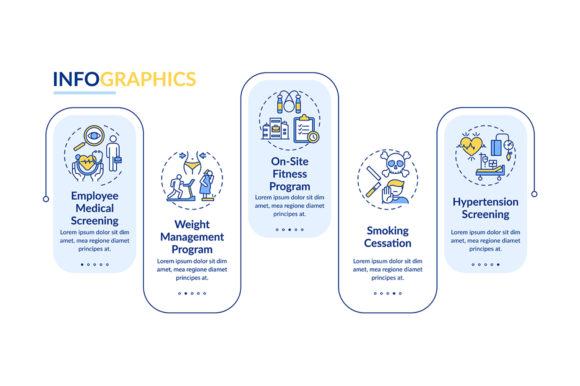
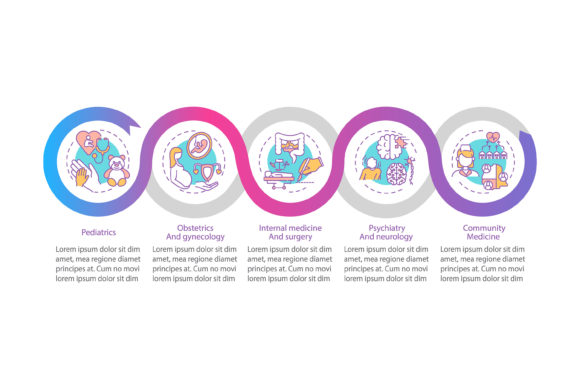
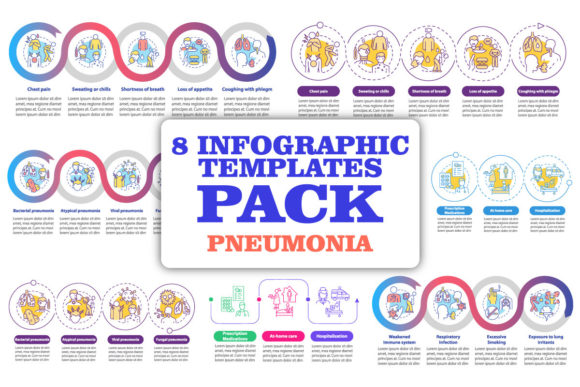
The core value of this collection lies in its eight distinct templates, each targeting a different aspect of information architecture relevant to pneumonia categorization. Rather than offering generic medical layouts, the set includes specialized formats such as atypical type presentation outlines, process timeline info charts, and workflow layouts featuring line icons. This specificity matters because pneumonia classification is rarely linear; it involves branching logic based on etiology (bacterial, viral, fungal), acquisition setting (community-acquired vs. hospital-acquired), and patient risk factors.
The inclusion of data visualization steps allows users to map out diagnostic criteria or severity scoring systems like CURB-65 without building charts from scratch. The workflow layouts are particularly useful for illustrating clinical decision support tools, where line icons guide the viewer through assessment, testing, and intervention phases. From a design consistency standpoint, maintaining a unified visual language across these varied chart types is difficult when sourcing assets individually. This set provides that pre-established coherence, ensuring that a timeline slide visually aligns with a categorization matrix in the same presentation or brochure.
Technical Specifications and Workflow Integration
For designers and content creators, file format flexibility dictates whether an asset can be integrated smoothly into existing workflows. This set delivers JPEG, AI, PNG, EPS, and SVG formats, covering the spectrum from quick web use to high-resolution print production. The vector formats (AI, EPS, SVG) are essential for medical infographics because they allow for non-destructive editing. Medical terminology changes, guidelines update, and branding colors shift; having fully editable vector paths ensures the templates remain viable long-term rather than becoming obsolete static images.
The PNG and JPEG options serve a different purpose, functioning as ready-to-use placeholders for rapid prototyping or stakeholder approvals before final vector refinement. In a professional agency or freelance environment, this multi-format delivery reduces friction. You can insert a rasterized version into a draft document for client review while retaining the source files for final production. The SVG format specifically adds value for digital-first publishers and app developers who need scalable graphics that render crisply on mobile devices and retina displays without increasing page load times significantly.
Practical Applications in Professional Contexts
Understanding who benefits most from the Pneumonia Categorization Infographic Set requires looking at real-world use cases beyond generic "medical design." Educators and academic researchers may find the atypical type presentation outline particularly valuable for lectures or journal posters where distinguishing between typical and atypical pneumonia presentations is a learning objective. The structured layout helps students visualize differences in symptom onset, radiographic findings, and causative organisms without overwhelming them with text-heavy slides.
For healthcare marketers and pharmaceutical communicators, the data visualization and process timeline components support content marketing efforts aimed at both HCPs (Healthcare Professionals) and patients. Explaining disease progression or treatment adherence becomes more effective when supported by clean, professional graphics that respect the intelligence of the audience. Public health organizations creating educational brochures or social media campaigns can utilize the workflow layouts to demystify when to seek care versus when to manage symptoms at home, directly supporting health literacy initiatives.
Freelancers and small agencies specializing in medical content will appreciate the time savings. Creating accurate medical infographics from scratch requires research, sketching, icon sourcing, and layout design. Starting with a validated template structure compresses this timeline significantly, allowing more budget allocation toward copywriting accuracy and fact-checking rather than pixel-pushing.
Assessing Quality and Usability Limitations
While the set offers strong structural foundations, users should approach it with realistic expectations regarding customization depth. Vector templates vary in how cleanly they are constructed. Before committing to a large project, it is advisable to open the AI or EPS files to verify layer organization, text editability, and icon grouping. Well-constructed medical templates separate background elements, iconography, and text boxes into logical layers, making global color swaps and content replacement efficient. Poorly constructed ones require manual ungrouping and path cleanup, which negates some time-saving benefits.
Another consideration is clinical accuracy. While the design structures are sound, the placeholder content must always be verified against current medical guidelines. Pneumonia categorization evolves with new research and regional epidemiology. These templates provide the container, not the authoritative content. Users bear full responsibility for ensuring that the medical information populated into these designs reflects current standards of care and regulatory requirements. The set is a design tool, not a clinical reference.
Additionally, the aesthetic style—featuring line icons and clean layouts—leans toward modern corporate medical design. This works well for B2B healthcare, tech-forward clinics, and digital publications but may feel too sterile for community outreach targeting elderly populations or pediatric contexts where warmer, more illustrative styles might build better emotional connection. Evaluating whether this visual tone matches your specific audience's expectations is a necessary step before adoption.
Long-Term Value and Ecosystem Considerations
Beyond this specific set, considering the source ecosystem adds context to the investment. BSD studio offers complementary resources including icons, brochure templates, infographic elements, and mobile app screen pages. For teams managing ongoing medical communication projects, sourcing from a consistent provider helps maintain brand cohesion across diverse deliverables. If you anticipate needing related assets—such as respiratory system anatomy diagrams or telehealth interface mockups—staying within a unified design ecosystem reduces the visual dissonance that occurs when mixing assets from disparate creators.
The long-term value of the Pneumonia Categorization Infographic Set ultimately depends on reuse potential. A single-use purchase for one presentation offers limited ROI. However, treating these eight templates as a modular system for an entire respiratory health campaign, educational curriculum, or content library transforms them into productivity multipliers. The ability to adapt the same workflow layout for influenza, COPD, or asthma education extends the asset's lifespan far beyond its original pneumonia focus.
Professionals should also consider the licensing terms relative to their distribution needs. Whether creating internal training materials, commercial publications, or patient-facing digital products, understanding usage rights prevents future legal complications. Assets that permit broad commercial use and modification offer greater strategic flexibility than those restricted to editorial or personal use.
Making an Informed Selection Decision
The Pneumonia Categorization Infographic Set represents a practical solution for professionals who need to communicate complex respiratory health information efficiently. Its strengths lie in structural variety, format flexibility, and professional aesthetic consistency. It performs best when used as a starting framework by users who understand both design principles and medical content requirements. Those seeking finished, medically verified illustrations may need to look elsewhere, but for creators who value editable, well-organized templates that accelerate production without sacrificing professional polish, this collection warrants serious consideration.
Evaluate your specific project needs against the eight included templates. If your work frequently involves explaining diagnostic categories, treatment timelines, or clinical workflows in respiratory medicine, the alignment is likely strong. If your needs are primarily anatomical illustration or patient testimonial storytelling, other specialized assets may serve better. Ultimately, the decision should rest on whether the time saved in layout construction justifies the acquisition cost and whether the visual style supports your communication objectives with appropriate professionalism and clarity.