Integrating Beach Activities Flat Color Vector Assets into Summer Design Workflows
Effective visual communication for summer campaigns requires assets that balance aesthetic appeal with functional versatility. The Beach Activities Flat Color Vector collection serves as a foundational resource for designers, marketers, and content creators tasked with producing seasonal materials under tight deadlines. Unlike raster images that lose quality when resized or require extensive editing to change colors, this vector-based asset pack provides a scalable, editable framework for creating cohesive visual identities across multiple touchpoints. Whether you are designing an informational infographic template, a summer recreation poster, or a corporate presentation slide, these assets bridge the gap between conceptual planning and final execution.
In professional design workflows, consistency is often the primary bottleneck. Sourcing individual illustrations from disparate artists leads to mismatched line weights, conflicting color palettes, and disjointed character styles. This collection solves that friction by offering a unified visual language. The flat color style is particularly strategic for modern digital interfaces and print media because it reduces visual noise, ensures fast loading times on web platforms, and maintains clarity at both thumbnail and billboard scales. By treating this vector pack as a modular design system rather than a set of static decorations, teams can accelerate production cycles while maintaining high standards of brand alignment.
Strategic Application Across Project Phases
The utility of Beach Activities Flat Color Vector assets extends beyond simple decoration. These elements play specific roles during the pre-production, active design, and post-production phases of a project lifecycle. Understanding where they fit prevents scope creep and ensures the visuals support the underlying message rather than distracting from it.
Pre-Production and Concept Validation
During the ideation phase, stakeholders often struggle to visualize abstract concepts like "summer engagement" or "seasonal productivity." Using these cartoon characters and activity scenes in low-fidelity mockups allows teams to validate tone before committing to full production. For example, an educator planning a summer curriculum can test whether the character demographics and activities resonate with their target age group by placing them in a draft booklet layout. Marketers can use the assets in internal pitch decks to demonstrate how a proposed advertising flyer will look without spending budget on custom illustration. This rapid prototyping capability reduces revision rounds later in the process.
Active Production and Asset Customization
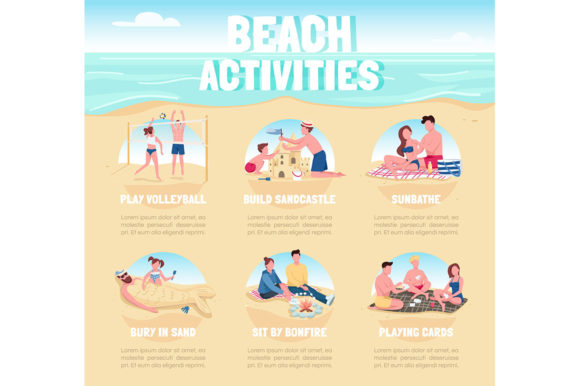
Once a concept is approved, the technical flexibility of the included EPS, AI, and SVG files becomes critical. Professional workflows demand adaptability. A social media manager might need a square crop of a beach volleyball scene for Instagram, while a web developer needs the same scene optimized as an inline SVG for a landing page hero section. Because these are true vectors, every element remains crisp regardless of the output format. The flat color architecture also simplifies recoloring; designers can globally swap hex codes to match specific brand guidelines in seconds, ensuring that a generic beach scene transforms into a proprietary brand asset without complex masking or repainting.
Post-Production and Repurposing
Sustainability in design means maximizing the ROI of every asset purchased. After the primary campaign launches, these vectors facilitate efficient repurposing. A summer recreation poster created in June can be adapted into an autumn newsletter header simply by adjusting the background color and swapping out specific activity icons, provided the core character style remains consistent. The inclusion of JPG and PNG formats alongside source files ensures that non-designers on the team can still utilize the assets for quick internal communications or presentations without needing specialized software, extending the value of the pack across the entire organization.
Technical Compatibility and File Management
Successful integration depends heavily on understanding the technical specifications and organizing files for team access. The ZIP file structure containing multiple formats is designed to accommodate diverse software ecosystems, but it requires proper management to prevent workflow bottlenecks.
- AI and EPS Files: These are your master sources intended for Adobe Illustrator or compatible vector editors like Affinity Designer. Use these for heavy customization, combining elements, or preparing large-format print files. Always save a working copy separate from the original master to preserve asset integrity.
- SVG Format: Essential for web development and UI design. SVGs should be cleaned and optimized using tools like SVGO before deployment to reduce file size. They are ideal for responsive infographics and interactive web banners where scalability is non-negotiable.
- PNG and JPG: Best for quick insertion into PowerPoint, Word documents, or email marketing platforms. Ensure you select the appropriate resolution; PNGs with transparency are preferable for overlaying on colored backgrounds, while JPGs are suitable for photographic composites.
For teams using cloud storage or digital asset management (DAM) systems, tag these files immediately upon extraction. Metadata such as "summer," "flat design," "vector," "beach activities," and "infographic template" improves searchability. Without proper tagging, valuable assets become buried in generic folders, negating the efficiency gains of purchasing a comprehensive pack.
Design Implementation for Specific Deliverables
Different deliverables require different approaches to composition and hierarchy. The Beach Activities Flat Color Vector pack supports various outputs, but each demands specific attention to detail to avoid looking generic.
Informational Infographic Templates
Infographics rely on data visualization, not just illustration. When using these vectors for educational or statistical content, treat the cartoon characters as navigational guides rather than mere decoration. Position characters to point toward key data points or to demonstrate processes sequentially. The flat color style is advantageous here because it creates distinct layers of information; foreground characters can be saturated while background elements remain muted to establish depth without clutter. Ensure sufficient whitespace around vector elements to maintain readability, especially when exporting for mobile viewing.
Advertising Flyers and Leaflets
Print advertising requires high-resolution output and careful color management. While vectors are resolution-independent, the colors must be converted appropriately for the printing process. If designing for offset printing, verify that the flat colors translate well to CMYK profiles to avoid unexpected shifts in vibrancy. Use the activity scenes to create focal points that guide the reader’s eye toward the call-to-action. In leaflet design, consider using isolated character cutouts to break up text blocks, making dense information more digestible. The playful nature of the cartoon style helps lower cognitive load, encouraging readers to engage with promotional content they might otherwise skip.
Presentation and Booklet Design
Corporate and educational presentations benefit from visual metaphors. Instead of bullet points describing "team building," use a composed scene of collaborative beach activities to anchor the slide. This approach leverages dual coding theory, where combining verbal and visual information enhances retention. For booklets, establish a grid system early. Align vector elements to the same baseline as your typography to create a sense of order. The consistency of the character designs allows you to build a narrative thread throughout a multi-page document, transforming a static PDF into a cohesive visual story.
Maintaining Quality and Brand Consistency
Access to pre-made assets does not eliminate the need for quality control. To ensure Beach Activities Flat Color Vector elements feel bespoke rather than stock, apply consistent modification rules across all projects. Define a subset of the color palette that aligns with your brand identity and restrict usage to those tones. Create component libraries or symbols in your design software so that if you update a character’s shirt color in one instance, it updates everywhere. This systematic approach prevents drift and ensures that even when multiple designers work on the same campaign, the output remains uniform.
Additionally, be mindful of cultural inclusivity and relevance. Review the cartoon characters and activities to ensure they accurately represent your audience. If necessary, modify skin tones, clothing, or equipment to better reflect the diversity of your user base. The editable nature of AI and EPS files makes this localization possible, turning a generic asset pack into a culturally competent communication tool. This level of customization demonstrates respect for the audience and enhances the effectiveness of the messaging.
Optimizing Workflow Efficiency
Ultimately, the goal of incorporating this vector pack is to streamline production without sacrificing creativity. Establish clear protocols for when to use these assets versus when to commission custom work. These vectors excel at illustrative support, iconography, and mood setting, but may not suffice for highly specific product photography or complex photorealistic rendering. Recognizing these boundaries prevents wasted time trying to force a square peg into a round hole.
By integrating Beach Activities Flat Color Vector assets thoughtfully into your design ecosystem, you create a reusable library of summer-themed visuals that scale with your needs. From initial brainstorming sessions using rough compositions to final delivery of print-ready posters and responsive web graphics, these tools provide the structural support necessary for efficient, high-quality creative output. The combination of versatile file formats, cohesive styling, and practical applicability makes this resource a staple for professionals managing seasonal campaigns, educational materials, and recreational marketing initiatives.